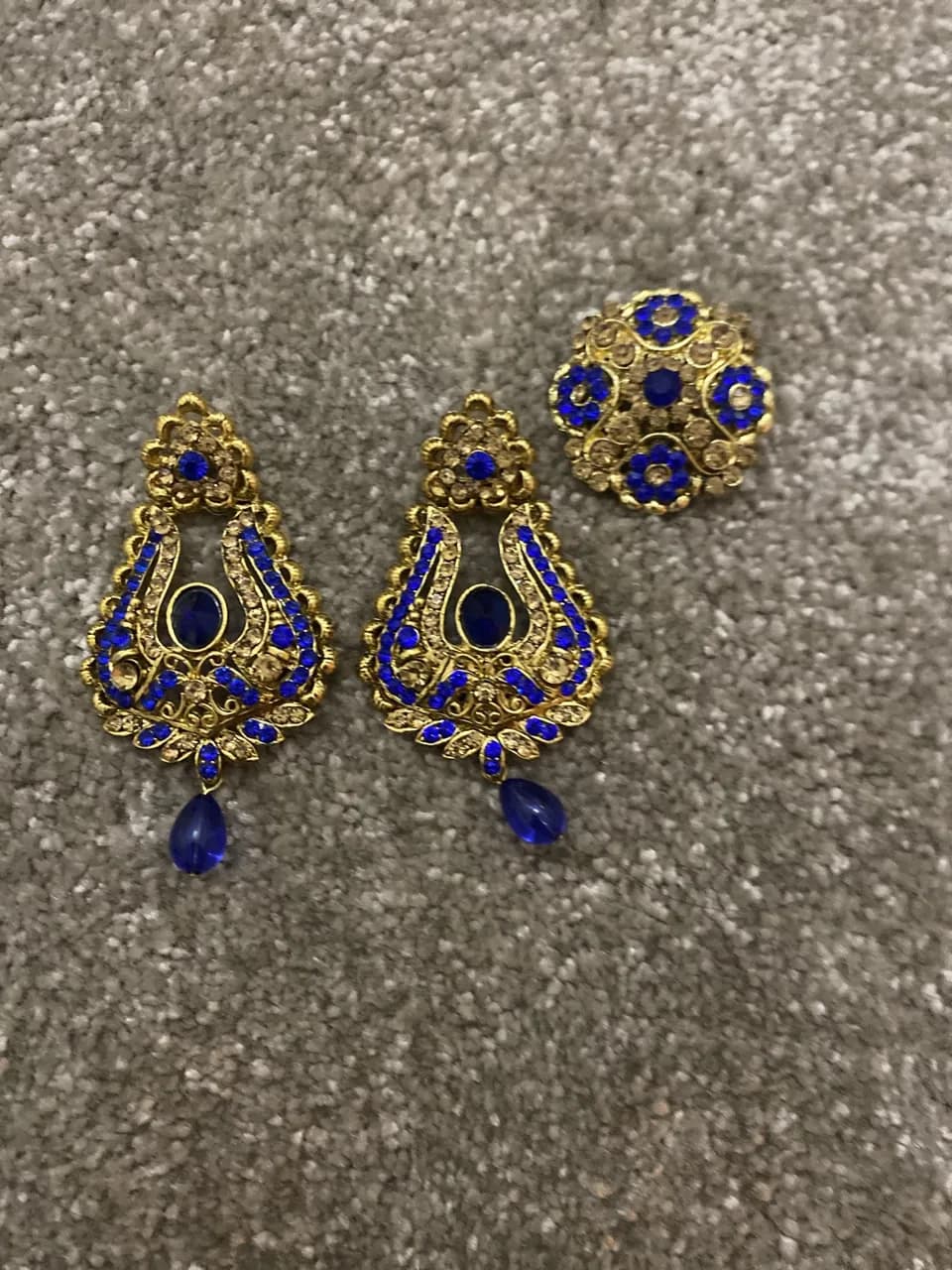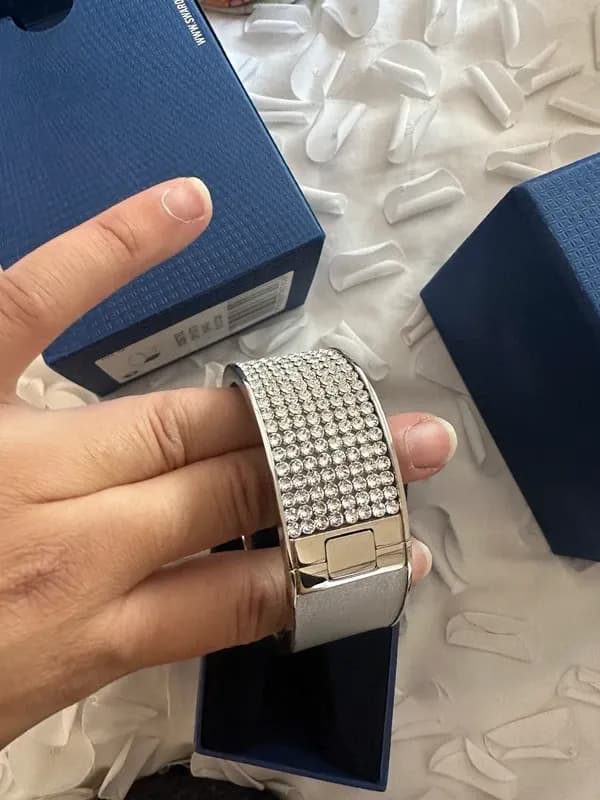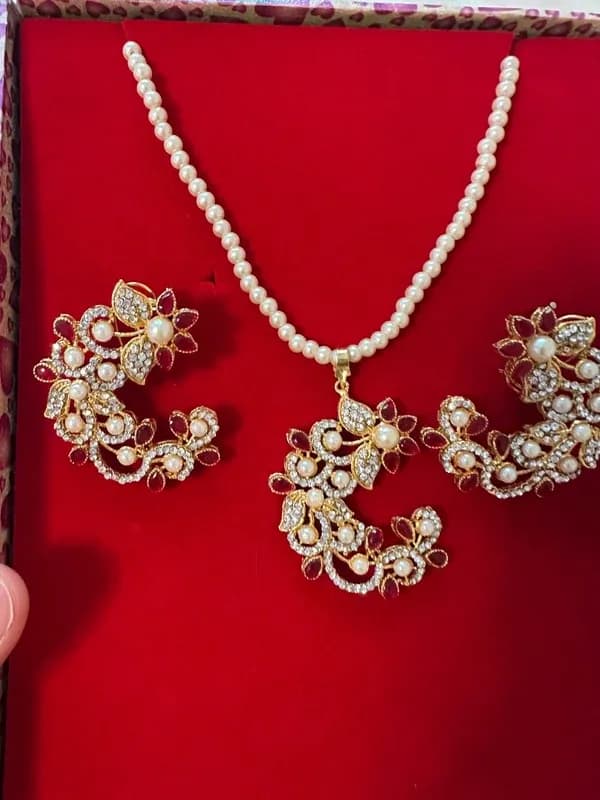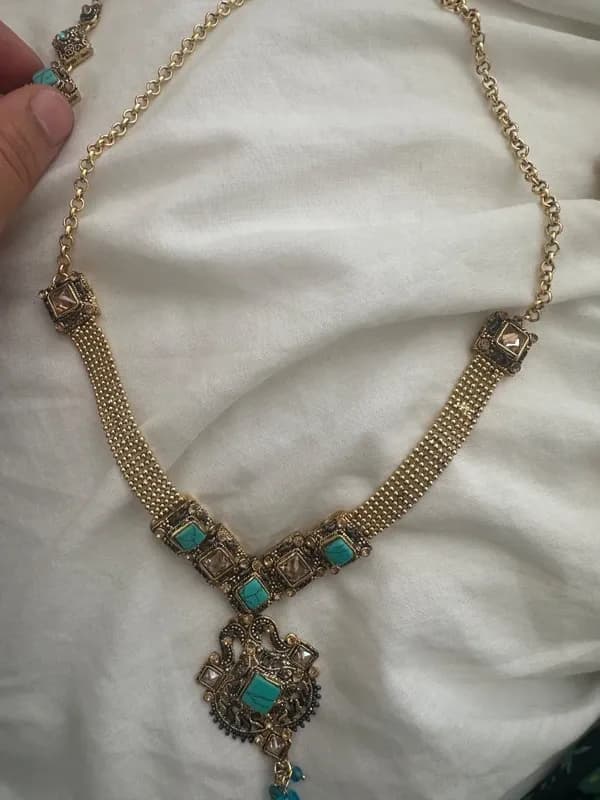
JewelleryReduced
Bridal jewellery
£120£19538% off
New with tagsSize Free Size
Blackburn·Listed today
✦ Buy & Sell ✦
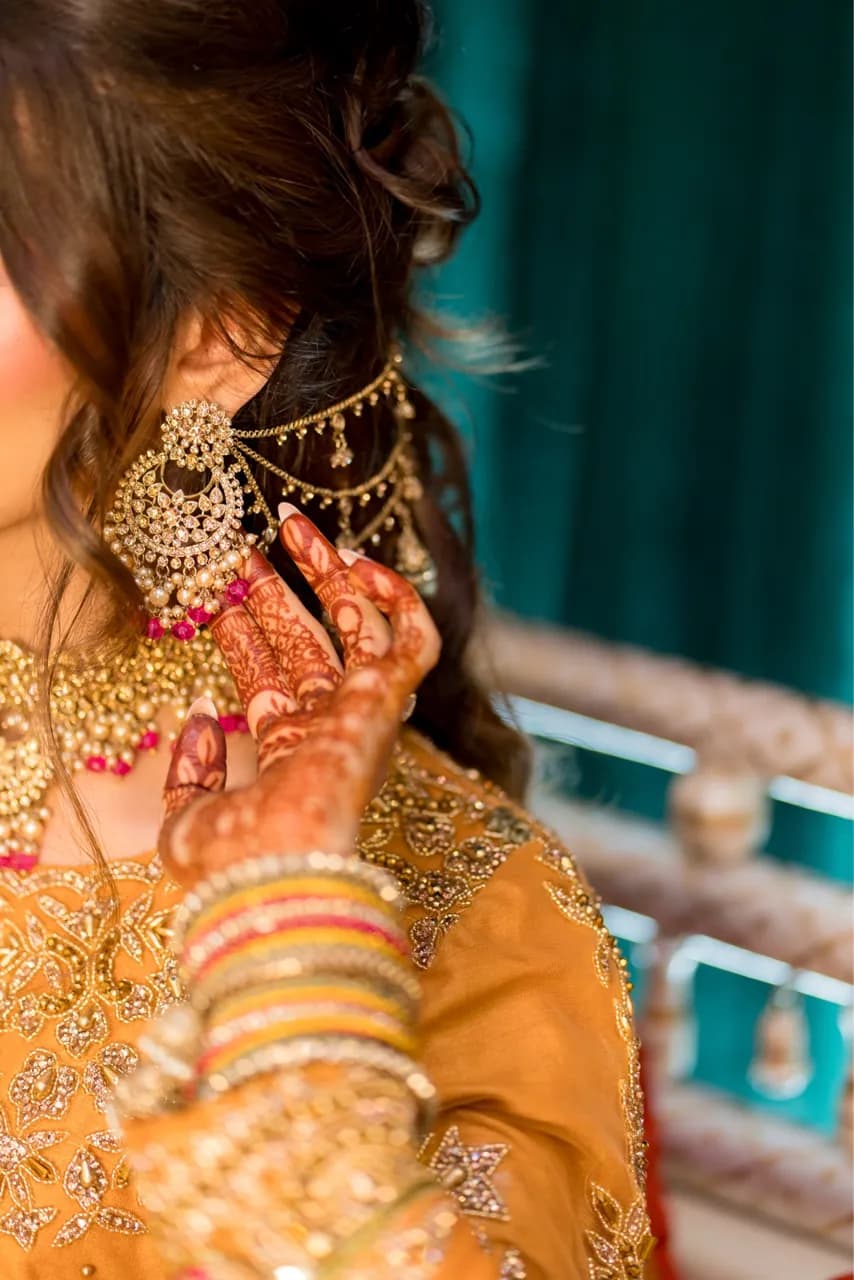
Bridal sets, kundan and polki necklaces, jhumkas, tikka and bangles. Worn for one wedding, then kept in a box for years.
Buyer’s Guide
Jewellery is the most under-used part of any Asian wardrobe. A bridal set is chosen for a single day, photographed endlessly, and then spends the next decade in its box. Unlike an outfit, it does not date, does not need altering and does not care what size you are, which makes it the easiest thing on this site to buy second-hand with confidence.
It helps to know what you are actually buying. The vast majority of Indian and Pakistani bridal jewellery is gold-plated brass rather than solid gold, because the traditional look calls for pieces far larger than anyone would sensibly commission in real gold. That is not a compromise, it is how the craft works. What it does mean is that condition is mostly a question of plating and settings rather than of metal value.
The one thing worth asking for every time is a photograph of the reverse. Almost no listing includes one, and it is where everything you care about lives: the plating behind the neck, the earring posts, the clasp, and the back-thread. A set that looks flawless from the front can be visibly worn from behind, and it is a two-second question that saves a return.
Kundan and polki settings hold stones in a soft gold-coloured resin that gives up over time. One missing stone in a dense panel disappears; one missing from a centrepiece does not. Ask for a close-up of the focal motif rather than the whole set.
Most Asian bridal jewellery is plated brass, not solid gold. Plating rubs off first where the piece touches skin: the back of a necklace, the inside of a bangle, earring posts. Ask the seller to photograph the reverse, which almost no listing shows by default.
Bridal sets are sold as sets and priced as sets. Confirm exactly what is included before you buy: necklace, earrings, tikka, matha patti, hath phool, nath. A missing tikka can knock a third off what a set is worth.
The failure point on almost every preloved piece. Check the necklace clasp closes firmly, that earring screws are not stripped, and that any adjustable back-thread (dori) is present and not frayed. These are cheap to repair but annoying to discover the week of an event.
Dull metal is usually tarnish and cleans up. Green or black spotting on the metal is corrosion and does not. Worth telling apart from a photo, because sellers frequently describe both as 'slightly dull'.
Heavy bridal necklaces pull, and a long day in one is a genuinely different experience from ten minutes at a counter. Ask for the weight in grams if it is a full bridal set. It also helps you judge whether a price reflects real substance.
Seller’s Guide
Two things decide whether jewellery sells here, and neither is the price. The first is photography. Almost everyone shoots a set inside its box, and the pale satin lining fools the camera into under-exposing the metal, so the piece looks flat and cheap. Take it out, lay it on something plain and dark, and shoot near a window. The difference is dramatic.
The second is keeping sets together. A necklace, earrings and tikka sold as one set is worth substantially more than the same three pieces listed separately, because buyers are shopping for a complete bridal look and do not want to hunt for a matching tikka. If something is genuinely missing from the set, say so in the description rather than cropping it out of the photograph.
Expected pricing: artificial earrings and single pieces usually sell between £10 and £40. A matching necklace-and-earring set lands between £30 and £90. A full bridal set with tikka and matha patti generally sits between £70 and £250. Real gold or silver is priced against its metal weight and goes well above that. Listing is free, and a boost helps in the run-up to wedding season.
Common Questions
Usually not, and that is normal rather than a warning sign. The overwhelming majority of Indian and Pakistani bridal jewellery is gold-plated brass or artificial (imitation) work, because the traditional bridal look uses pieces far larger than anyone would commission in solid gold. Real gold and solid silver pieces do appear on the site and sellers price them accordingly. If a listing does not say, ask directly, and treat anything heavily discounted but described as solid gold with caution.
Polki uses uncut, unfaceted natural diamonds set in gold. Kundan is the setting technique itself, where stones (usually glass or synthetic in artificial pieces) are held in place with refined gold foil. In practice, on a preloved marketplace, most pieces described as either are artificial recreations of the look. Polki-style pieces tend to have a softer, milkier sparkle; kundan-style ones a flatter, more mirror-like face.
Artificial earrings and single pieces typically sell between £10 and £40. A matching necklace-and-earring set usually lands between £30 and £90. A full bridal set with tikka and matha patti generally sits between £70 and £250 depending on size, condition and whether it is a recognised label. Anything in real gold or silver is priced against its metal weight and sits well above these ranges.
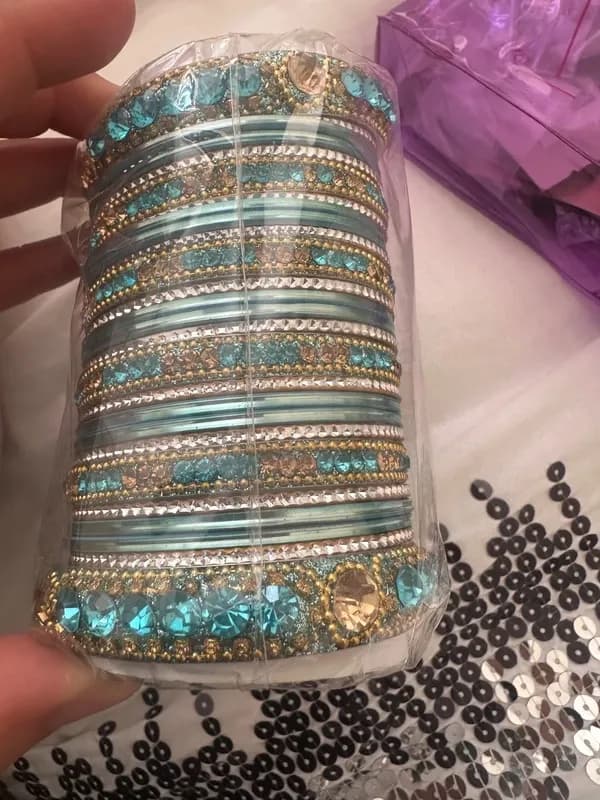
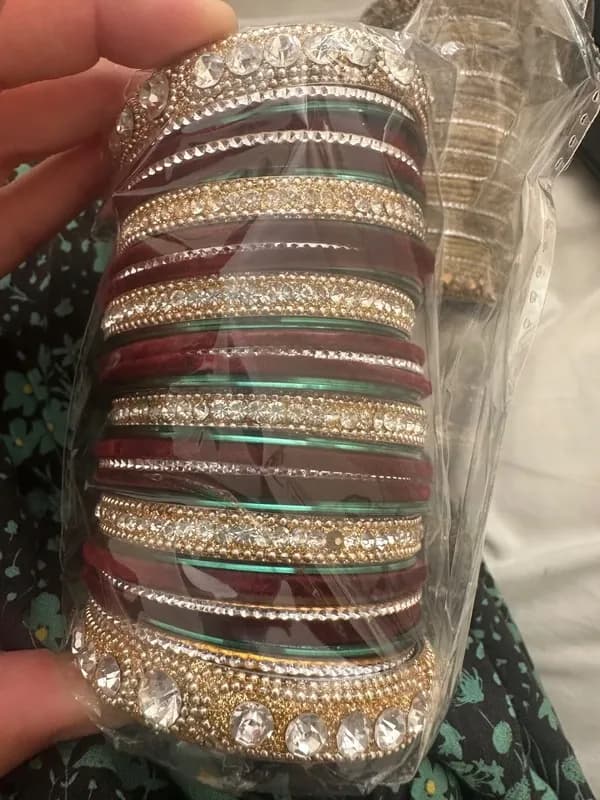
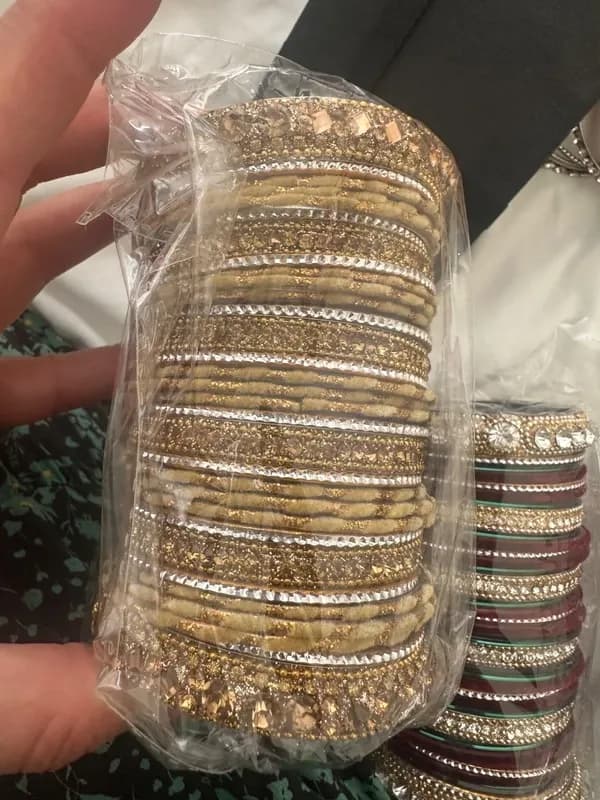
Necklaces are the easiest — most have an adjustable back-thread, and a jeweller can shorten or extend a chain cheaply. Bangles are the hardest, because Asian bangles are usually a fixed size with no join, so buy by measurement rather than by a size label. Missing stones can often be replaced by any high-street jeweller for a few pounds, which makes a slightly damaged set worth considering if the price reflects it.
Measure across the widest part of your hand with the thumb tucked in, in centimetres, then match that to the internal diameter the seller gives. UK sellers usually quote the Indian sizing scale (2.4, 2.6, 2.8 and so on), which is the internal diameter in inches. If the listing does not state a size, ask for the internal diameter measured across the inside of the bangle rather than the outside.
Listing is free. Photograph pieces on a plain dark surface rather than in the box, since box linings blow out the exposure and hide detail, and include one shot of the reverse so buyers can see the plating and clasps. Say clearly what the set contains and whether anything is missing. Sets sell considerably faster than single pieces, so keep a set together rather than splitting it.
Preloved pieces listed by sellers across the UK.